For Alex, 
love at first ride!
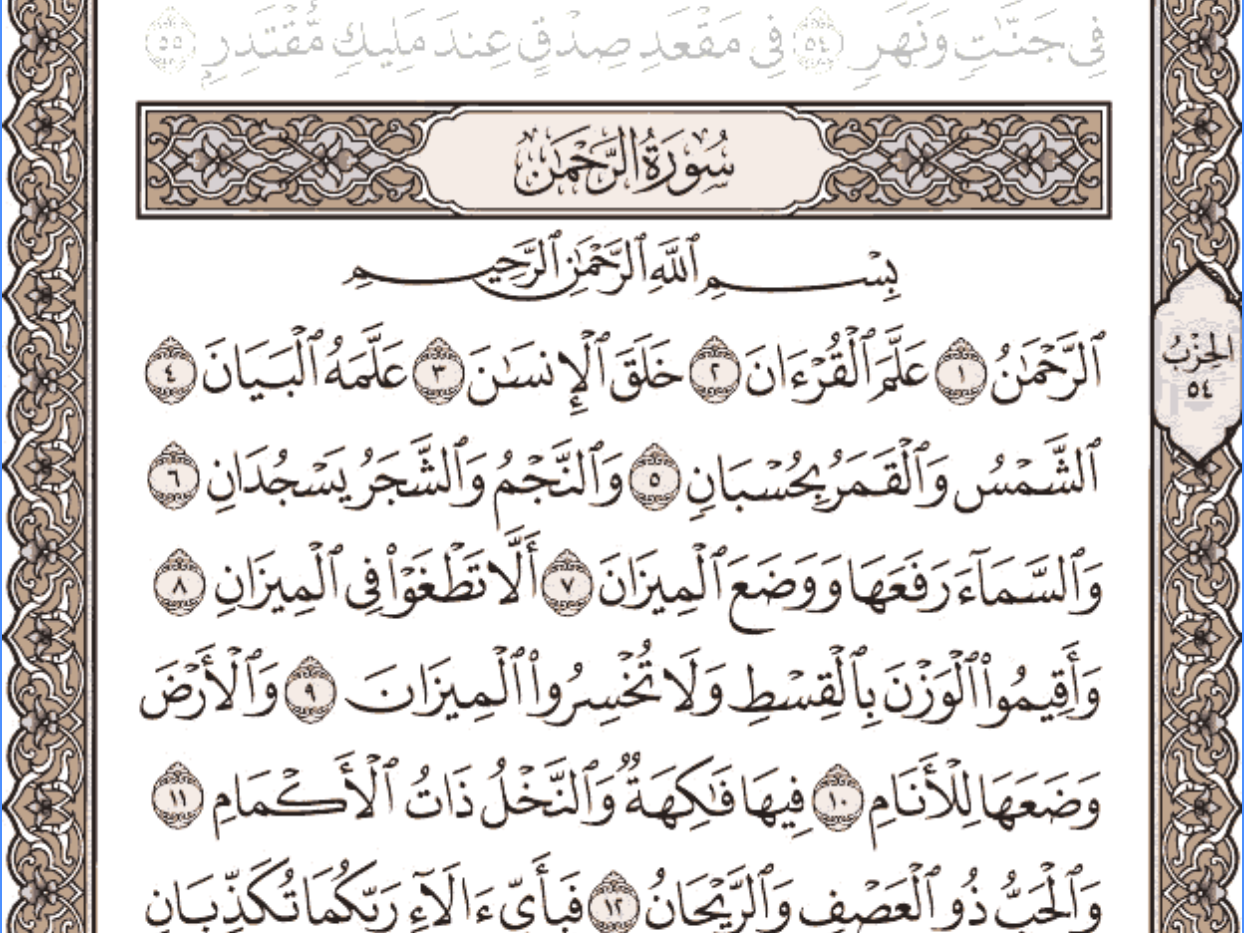
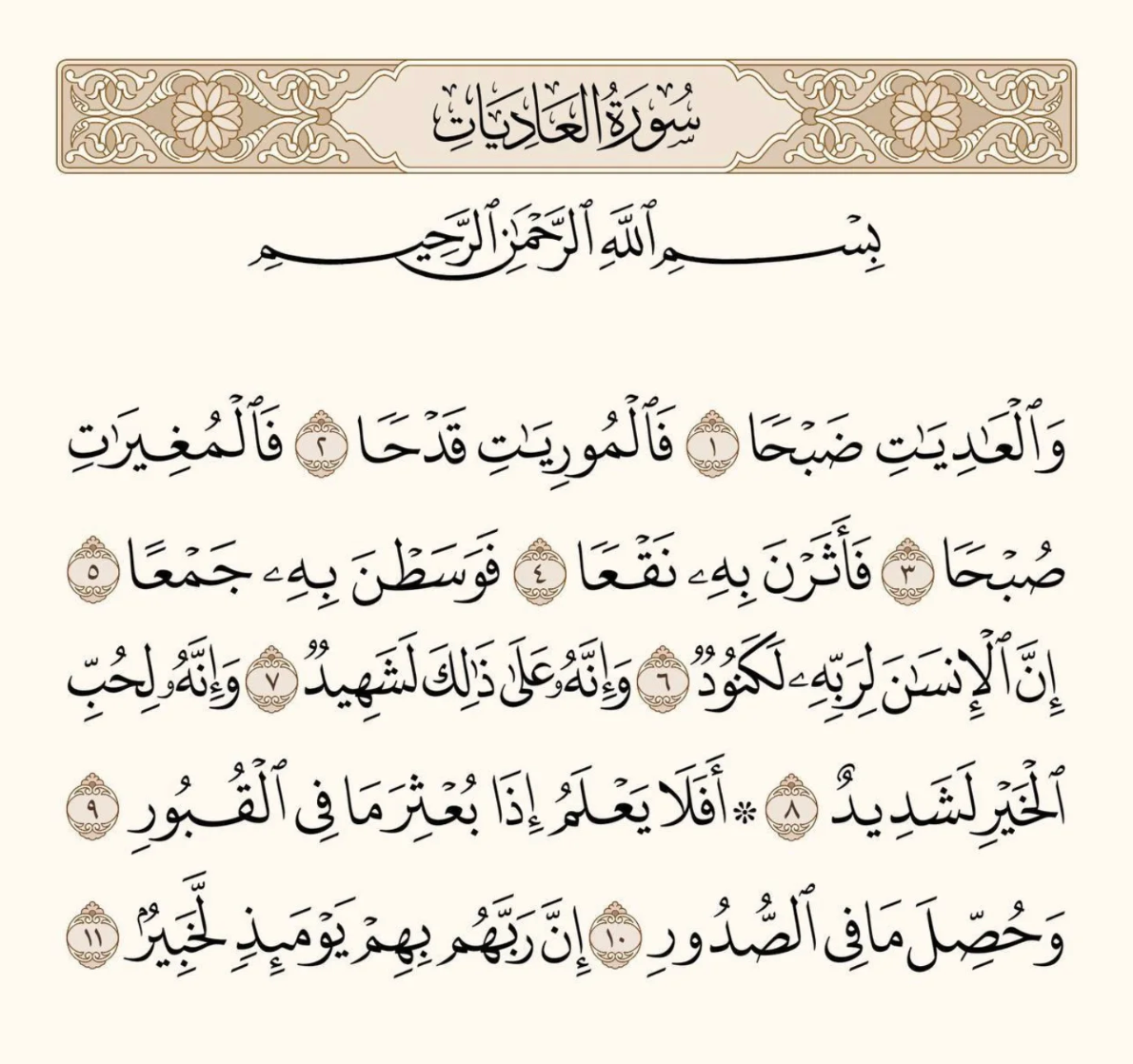
1. By the charging steeds that pant,
2. and strike sparks with their hooves,
3. who make dawn raids,
4. raising a cloud of dust,
5. and plunging into the midst of the enemy —
6. indeed, man is ungrateful to his Lord.

(Qur’an, Surah Al-ʿAdiyāt, 100:1–6)
The Chargers: Unhesitating Obedience
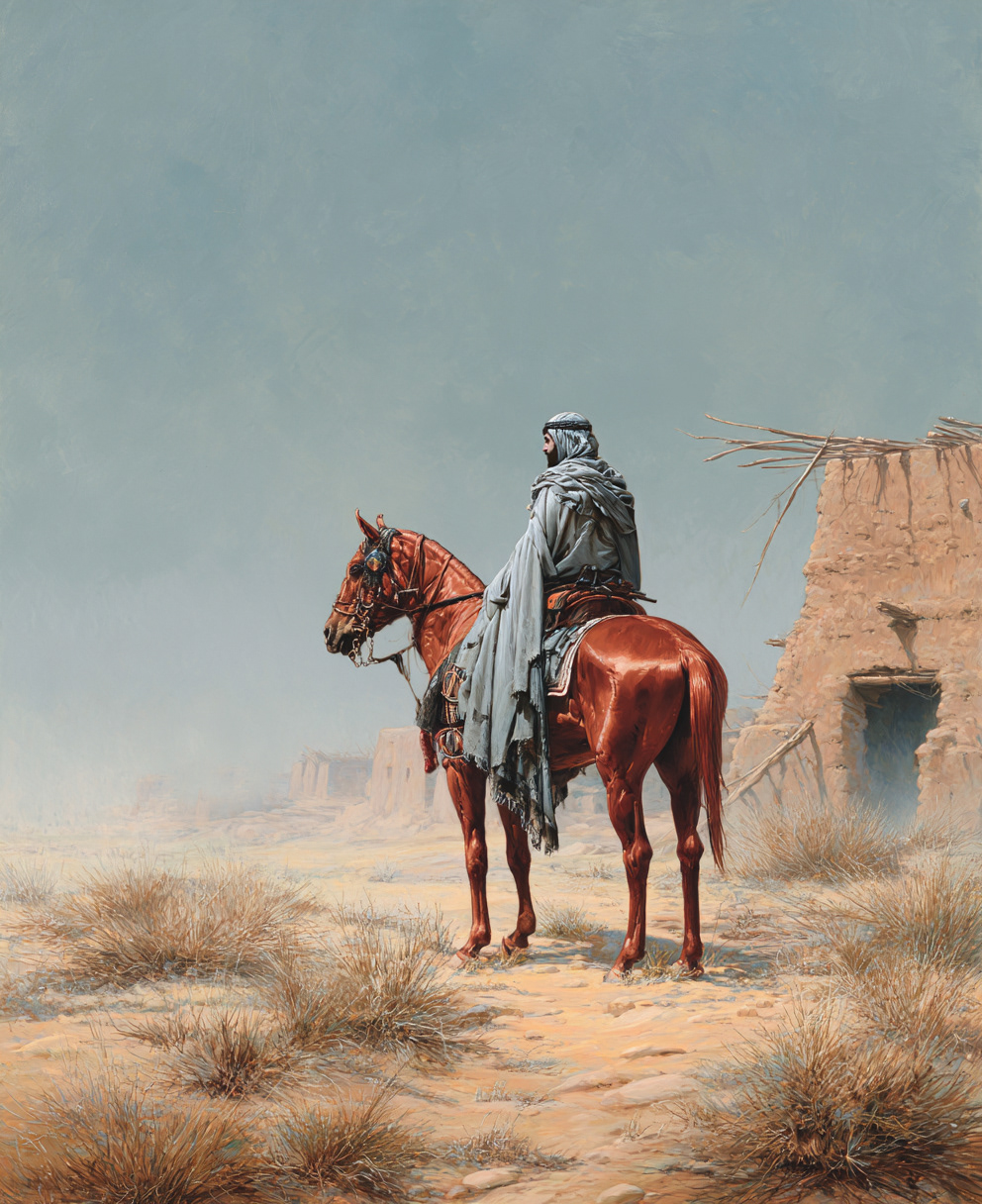
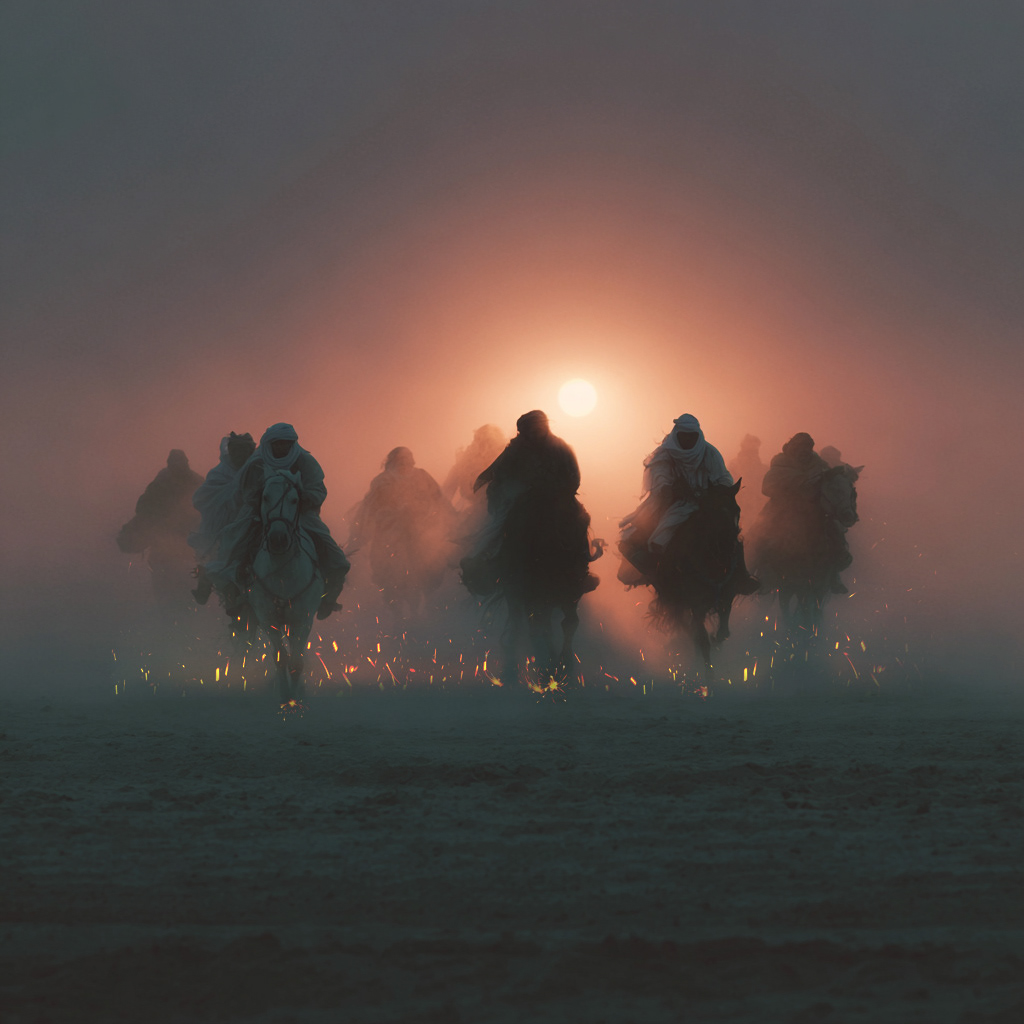
Revealed in Mecca, Surah Al-‘Adiyat opens with a vision of breathtaking energy. The scene is cinematic: horses galloping before dawn, their breaths heavy, their hooves striking sparks as they charge forward together, stirring clouds of dust as they advance into the midst of the enemy. Rooted in the desert life of Arabia, this imagery is not merely descriptive; it is a form of divine testimony.
God presents the charging horses as an oath — invoking their loyalty, their power, and their precision — to remind humankind of what it so often lacks: gratitude and devotion. The contrast is striking. The horse, a creature of instinct, charges into battle at the command of its rider without hesitation, while man loses himself in worldly gains and becomes forgetful and ungrateful. In this comparison, the Qur’an offers a profound moral inversion: the animal displays a nobility of spirit that humankind, in its pursuit of wealth and self-interest, too often forgets.

The horse symbolizes unhesitating obedience; man represents heedless forgetfulness.
Horsemanship: Leadership & Partnership
The Qur’anic oath of the horse is not only an aesthetic marvel but a profound lesson in leadership. Horses test their riders to discern whether they are worthy leaders. They obey the rider who leads with intention, and they resist the one who commands through fear. A true rider must cultivate patience, consistency, and composure. To ride well is to lead with courage; to be obeyed not through fear but through presence.
The art of horsemanship becomes an ethical training ground — a space where inner discipline and outward grace meet. In Arab and Islamic tradition, horsemanship has always been more than a sport; it is an expression of character. To master a horse is to master oneself.
The reins do more than guide the horse — they connect heart to heart. A horse senses its rider’s emotions — pride, fear, calm — and mirrors them. In the Qur’anic imagery, this bond becomes ethical and spiritual: the horse mirrors what the believer ought to be — faithful, responsive, devoted to command not through coercion but conviction.
Horsemanship thus becomes an allegory of stewardship: the rider mirrors divine guidance, and the horse, in its yielding, mirrors the faithful soul. Together, they move as one. A warrior and his horse symbolize both freedom and faith.

The horse reminds us that obedience is anchored in trust. In the horse’s yielding, obedience becomes an act of faith. 
Leadership Within the Herd: The Alpha Horse
Horses are herd animals — deeply social and highly sensitive. Within every herd, there is an unspoken hierarchy led by the alpha horse, often a mare. Her authority is subtle yet absolute. She leads by directing movement, protecting boundaries, and sensing threats before they appear. She governs the herd by claiming space; when another horse crosses that space, she steps forward to restore order. The herd responds to her because they trust her presence.
In the wild, leadership does not belong to the strongest or the fastest, but to the most attuned. To lead is to protect. To obey is to trust.
In training, the human takes on the role of this alpha leader. To gain a horse’s respect, one must first earn its trust. The language of the legs, circles, pressure, and release becomes a dialogue of trust — a choreography of authority and respect. When a horse yields its hindquarters or side-walks on cue, it is not simply obeying commands; it is acknowledging the trainer’s leadership. Likewise, in human life, leadership is hollow without emotional mastery.

True leadership is an act of duty and service.
Watching skilled trainers work with horses reveals that there is, in fact, a language to them — a nonverbal dialogue of body, space, and energy.

In this video, Ryan Rose demonstrates how Western Horsemanship — and especially the art of horse training — reveals that leadership is not domination, but communication.

In this video, Ryan Rose explains that a horse’s responsiveness depends on how much it sees us as a leader. Leadership is not about petting, washing, or feeding the horse. True leadership comes from controlling the horse’s legs.
Educate yourself on Horsemanship by subscribing to Ryan Rose and Steve Young Horsemanship on YouTube for more training sessions.
The Arabian Horse: Heart of Arab Identity
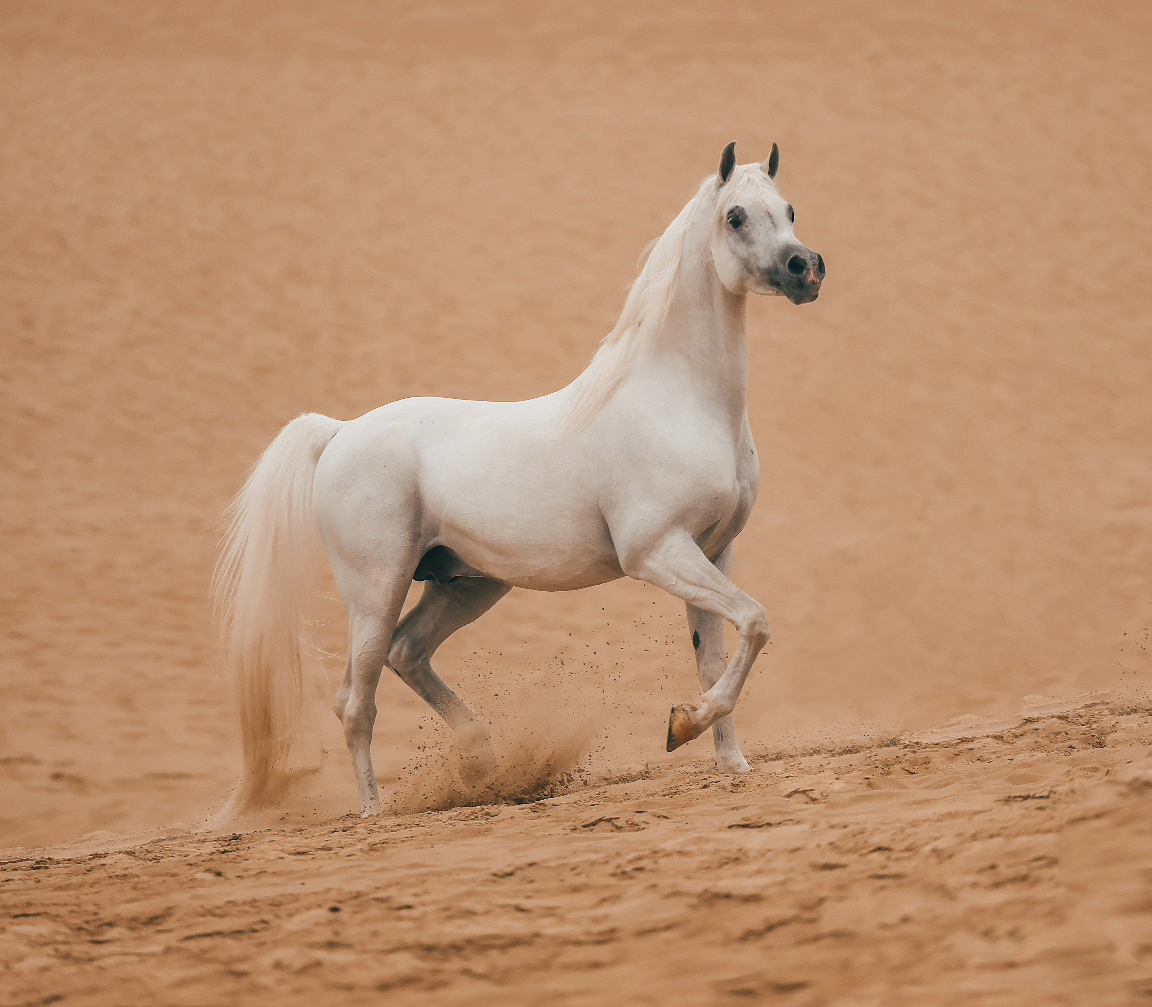
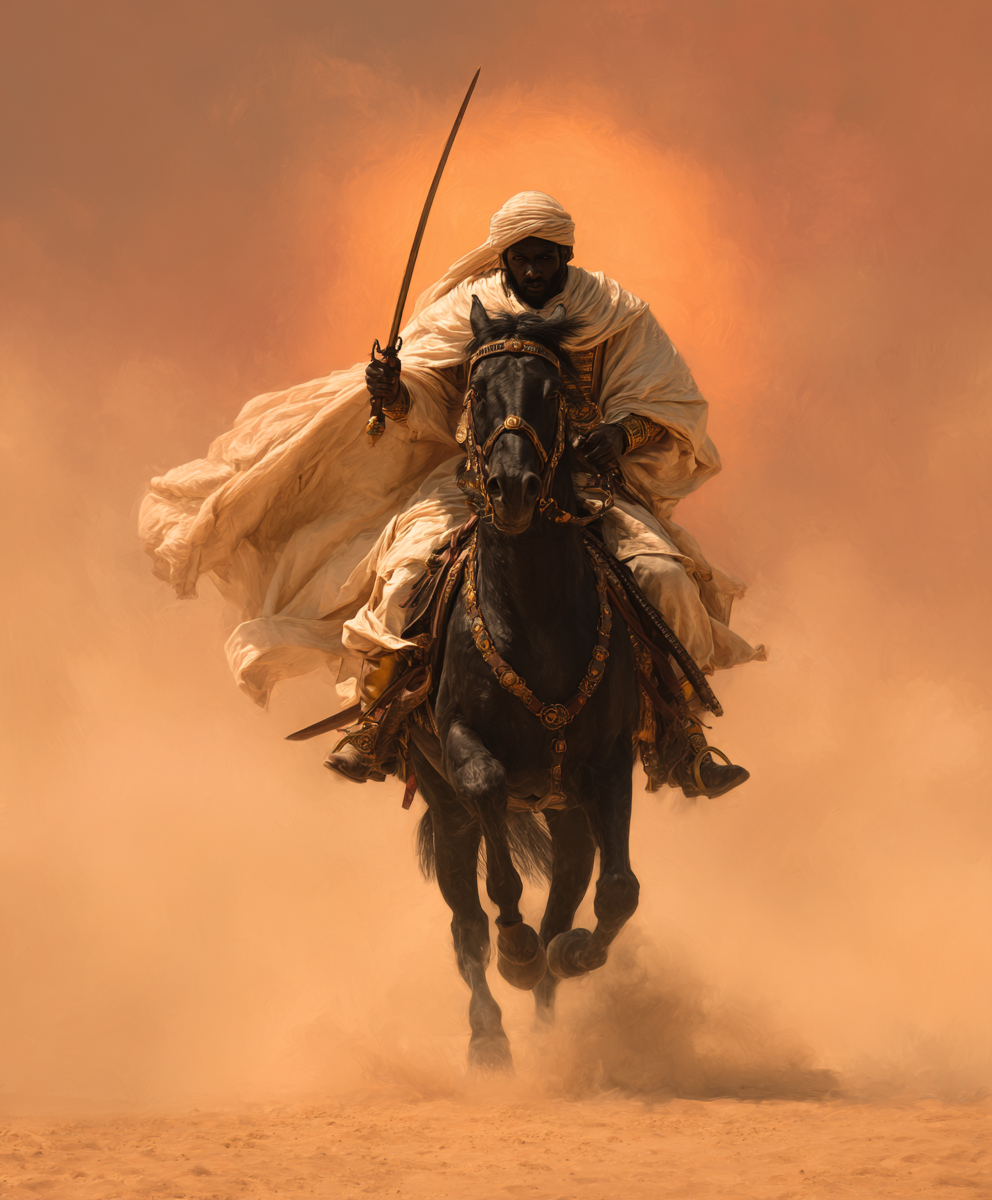
The Arabian horse lies at the heart of Arab cultural and spiritual identity, embodying the desert’s beauty, endurance, and the vigilance it demanded of its riders. Arab warriors grew inseparable from their horses, who carried them through danger, battle, and survival, becoming symbols of courage and honor celebrated in poetry and lineage. With the rise of Islam, this reverence deepened: the warrior and his horse came to represent divine purpose, transforming the horse into a metaphor for the believer’s soul — strong, aware, and ever in motion toward its destiny.
Antarah ibn Shaddad
A pre-Islamic Arab warrior-poet and one of the authors of the Mu‘allaqat—the celebrated collection of seven “hanging odes,” legendarily said to have been suspended in the Kaaba at Mecca. He was renowned for his bravery, horsemanship, and eloquence. Born to an Arab father and an Abyssinian mother, he spent his early life in servitude until his father acknowledged him after he proved his valor in battle. Antarah became famous for his heroic poetry and for his chaste, devoted love for his beloved ‘Abla.

عنترة بن شداد العبسي (525م - 608م)، فارس وشاعر جاهلي من أصحاب المعلقات، عُرف بشجاعته وفروسيته وبلاغته. وُلد لأبٍ عربي وأمٍ حبشية، وعانى في صغره من العبودية حتى اعترف به أبوه بعد أن أثبت بسالته في القتال. اشتهر بشعر الحماسة وغزله العفيف في محبوبته عبلة 
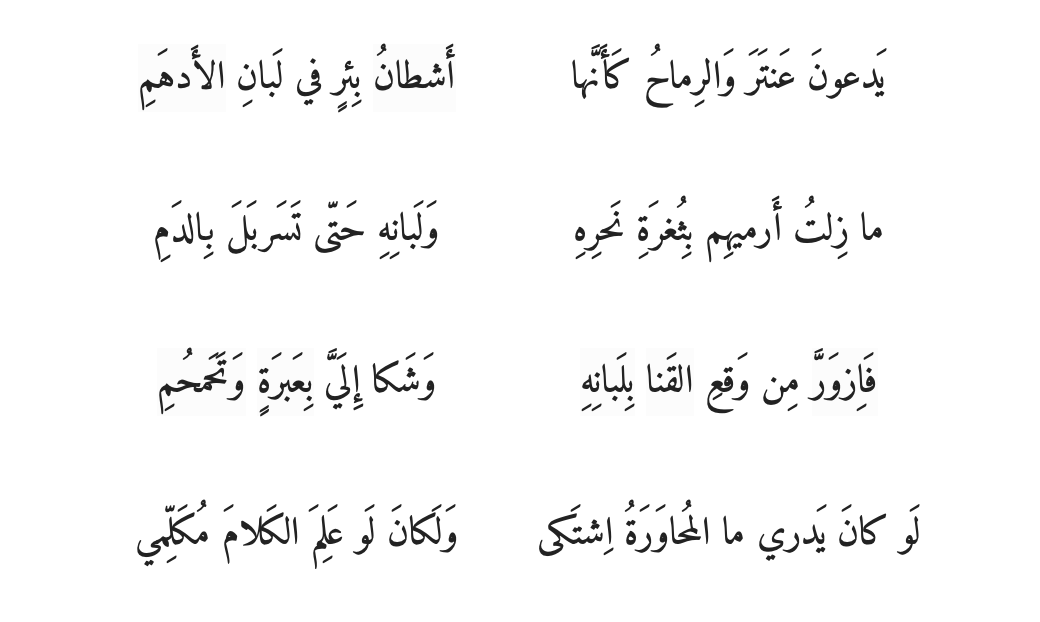
من روائع معلّقة عنترة بن شدّاد
These verses are among the most moving in pre-Islamic Arabic poetry. His comrades call out to Antarah while spears pierce the chest of his black horse, appearing like the long ropes of a well hanging down his breast. Yet Antarah continues to face his enemies with the horse’s head and chest at the forefront, until the loyal creature becomes covered in blood as though draped in red cloth. Eventually, the horse turns aside from the pain and expresses his suffering to Antarah with a tear in his eye and a faint, trembling whimper. Antarah reflects that if his horse understood human speech, he would have voiced his anguish; and if he knew how to speak, he would have confided in him like a true companion.
Antarah blends courage with a rare tenderness, seeing his horse not as a weapon of war but as a loyal companion who shares both pain and bravery. His attention to the horse’s tear and trembling breath reveals a deep empathy uncommon in warrior poetry. Through this bond, Antarah redefines heroism as both strength and humanity — the responsibility to honor the faithful being that carries him through battle.
Imru’ al-Qays
Imru' al-Qays (500–540 CE) was a pre-Islamic poet regarded as one of the greatest poets of the Arab tradition. He was described as the most eloquent of all poets and the author of the most famous of the Mu‘allaqat (the seven hanging odes). He is considered the first to establish the structure of the pre-Islamic ode with its three core themes: the stop at the ruins, love poetry, and the description of the journey. ​​​​​​​
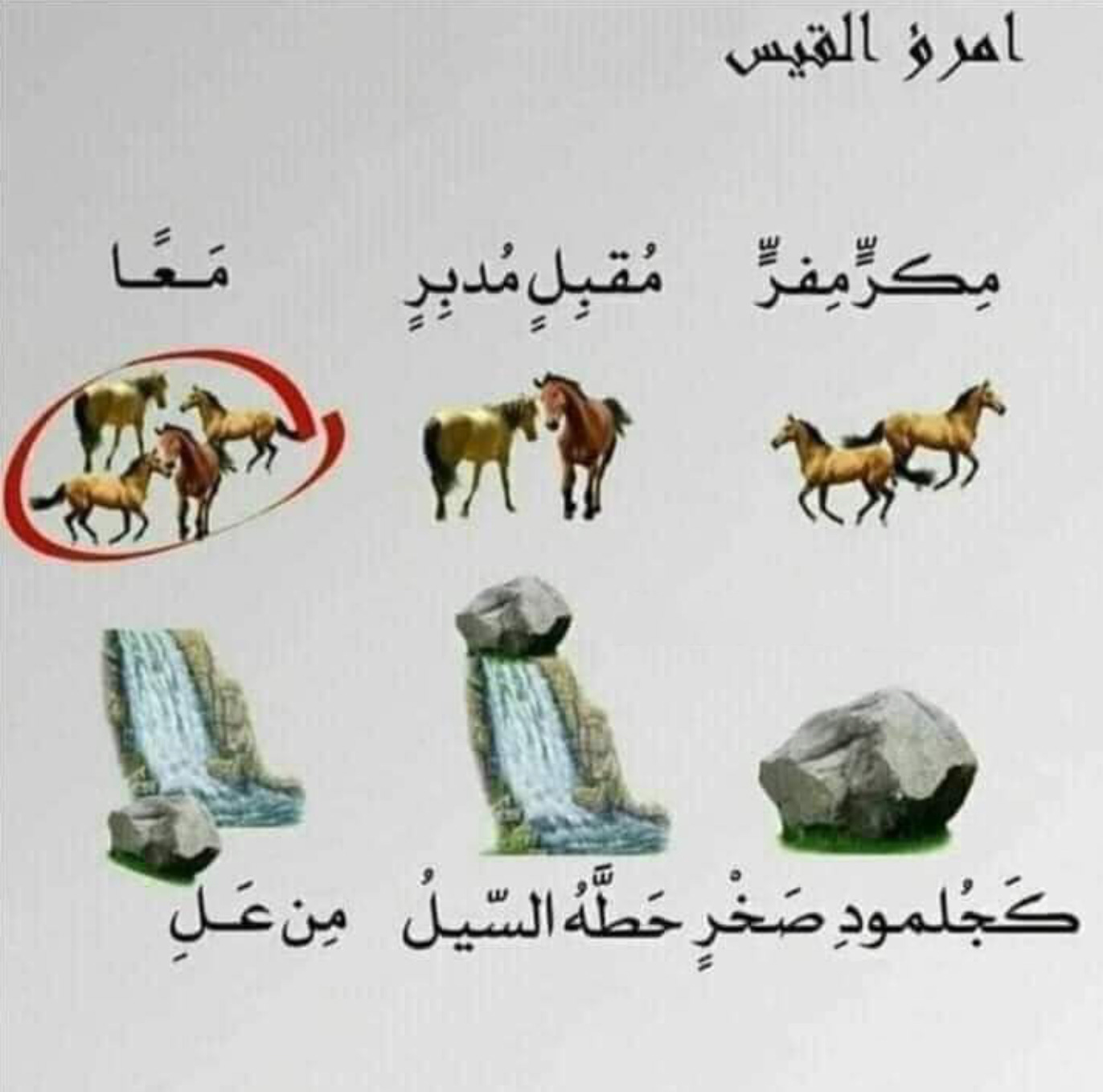
Another striking example of the vivid imagery found in pre-Islamic poetry comes from Imru’ al-Qays, who masterfully glorifies his horse through layered and dynamic descriptions. He depicts himself riding out at dawn on a powerful, swift stallion — so strong and fast it seems capable of overtaking even the wildest beasts as they flee. The horse charges and retreats with equal brilliance, moving so swiftly and forcefully that Imru’ al-Qays likens it to a massive boulder hurtling down a mountainside, swept forward by rushing floodwaters. The image emphasizes overwhelming speed, strength, and a rapid, unstoppable descent — a vivid portrayal of raw power in motion. He goes on to describe his horse as combining the grace of a gazelle, the long stride of an ostrich, the loose, effortless motion of a wolf, and the sure-footed pacing of a sand-grouse.​​​​​​​

امرؤ القيس بن حجر الكندي (500–540م)، شاعر جاهلي يُعد من أعظم شعراء العرب، وُصف بأنه أشعر الناس وصاحب أشهر المعلّقات. وهو أول من رسم ملامح القصيدة الجاهلية بمعانيها الثلاثة: الوقوف على الأطلال، والغزل، ووصف الرحلة
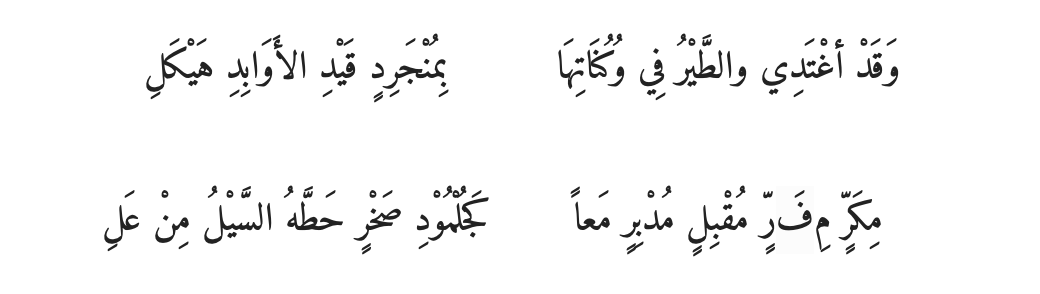
أشهر ما قاله امرؤ القيس هو معلّقته، وفيها يصف فرسه وصفًا بديعًا
: وفي موضعاً آخر يقول

To ride an Arabian is to inherit centuries of lineage, honor, and pride.
Equestrian Centers in Kuwait
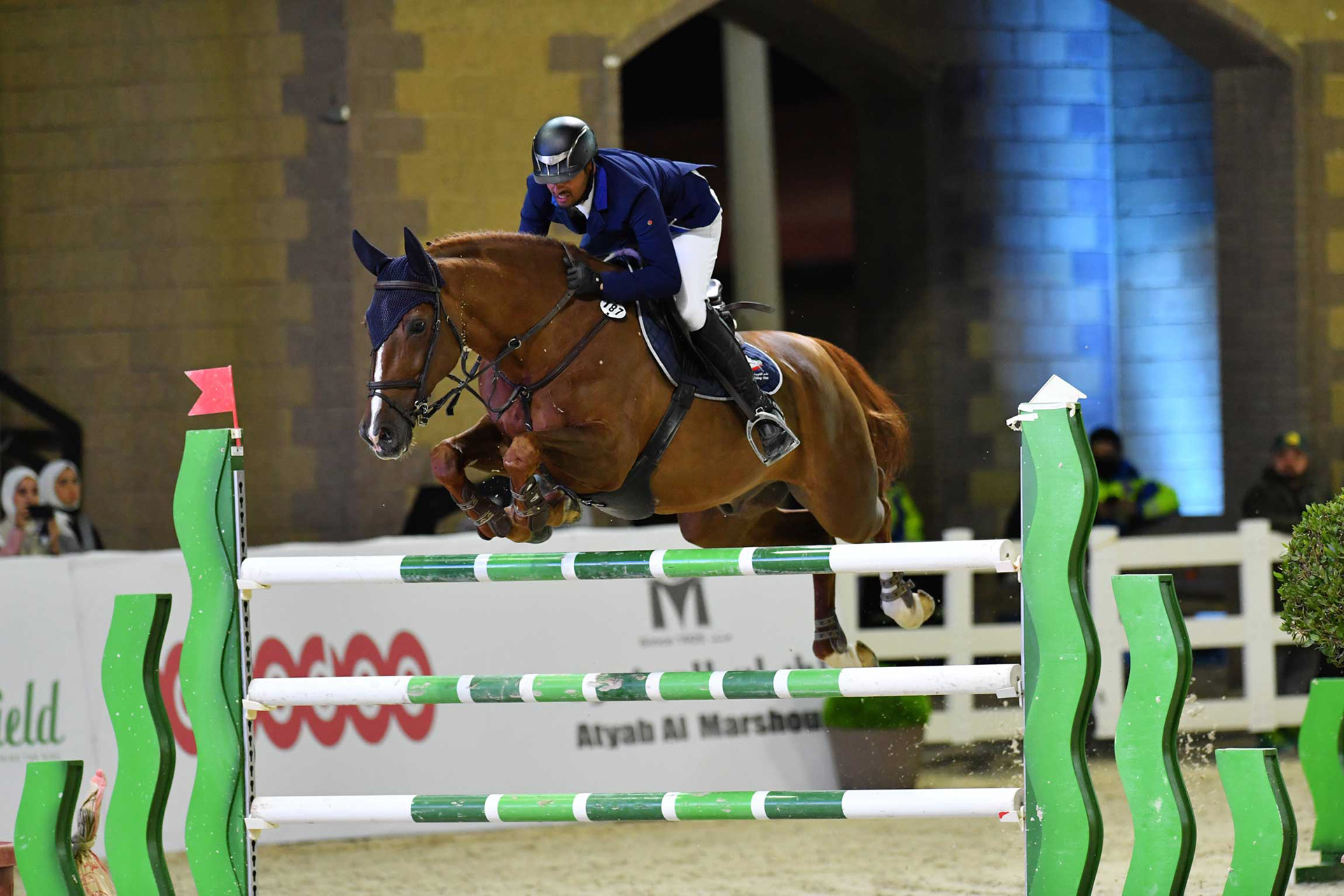
With the growing interest in horse riding, equestrianism has become increasingly popular in Kuwait — especially among women and kids. Most riding centers, however, focus primarily on show jumping. While show jumping has its merits, it also shapes the culture of riding in ways that limit the deeper dimensions of horsemanship. Driven by competition and financial agendas, often neglect leadership, partnership, and communication between rider and horse. This commercialized approach stands in stark contrast to the spirit of Surah Al-ʿAdiyāt, which highlights loyalty, trust, and authentic companionship.
Gaps in Horsemanship Education
There is a noticeable gap in Kuwait when it comes to foundational horsemanship: horse handling, groundwork, stable management, and the skills needed for horse ownership. Many people — myself included — are not interested in competitions but dream of owning a horse, riding for leisure, or simply enjoying the peace that comes from being around horses.
Some farm stables do offer this kind of training, but they are often far from the city and difficult to access.
Closing Reflection
Let us lean into leadership and embody what it truly means to be an alpha — as Arab women and men. Not only in the art of riding, but in the way we move through life. For women, this means reclaiming presence, grace, and discernment in relationships and within society; for men, it means leading with integrity, steadiness, and respect. Just as the alpha horse guides through protection rather than domination, may we learn to lead ourselves and others with clarity, courage, and authentic power.
Have faith. 

You may also like

Back to Top