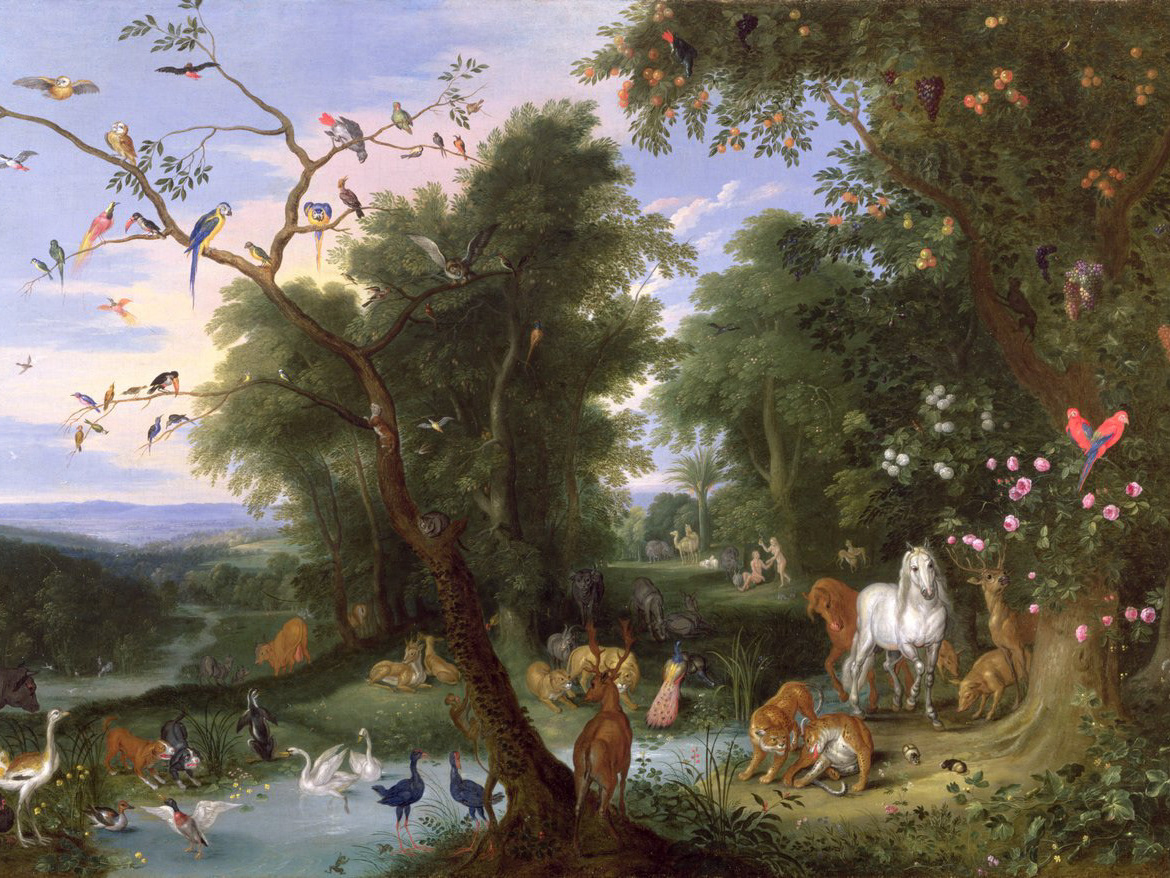
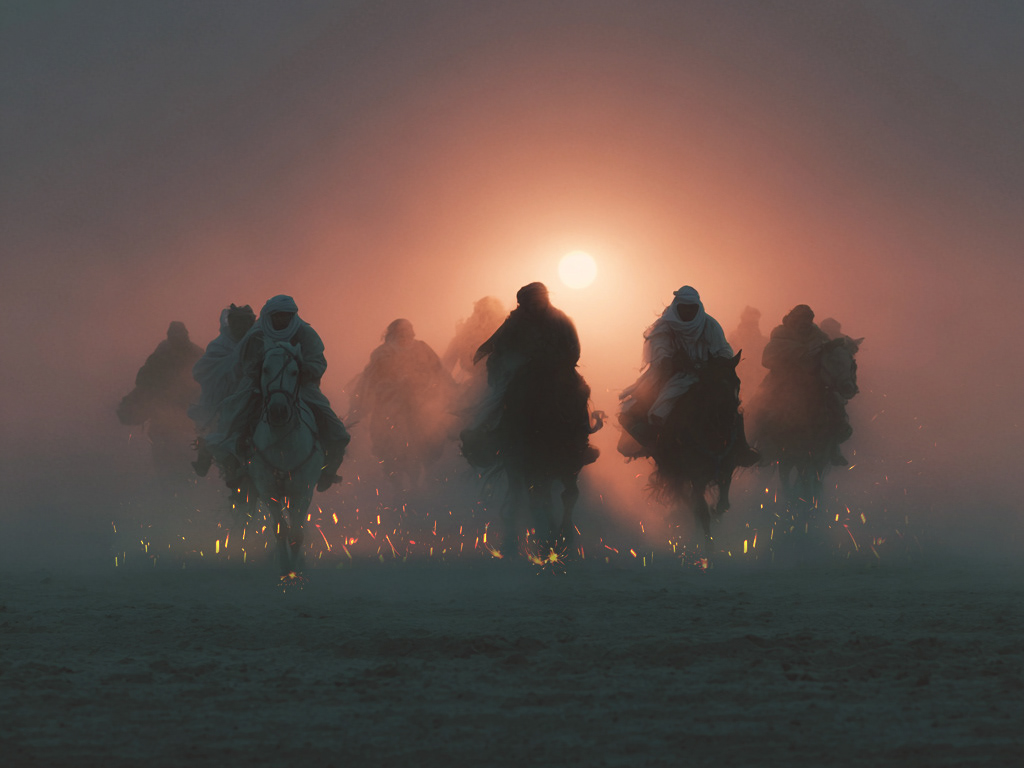
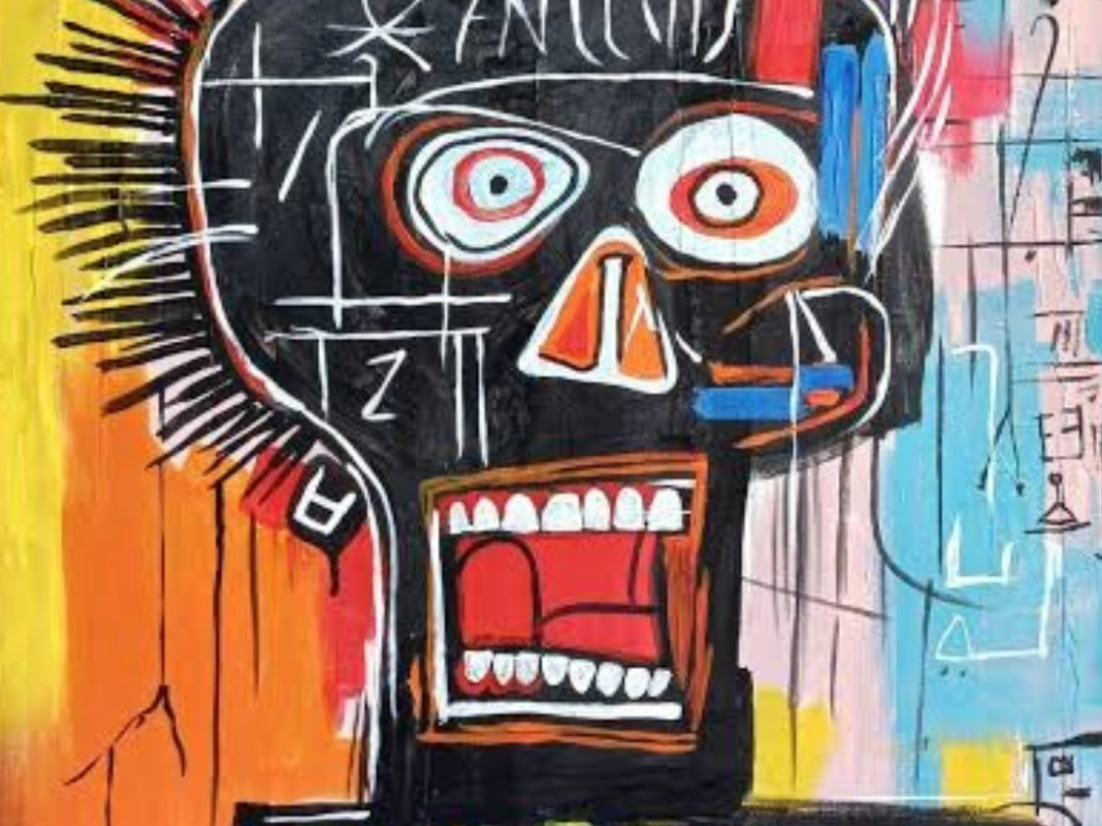
Special thanks to Dr. Yusef Salem,
Dept. of Art & Design, Kuwait University. 2009
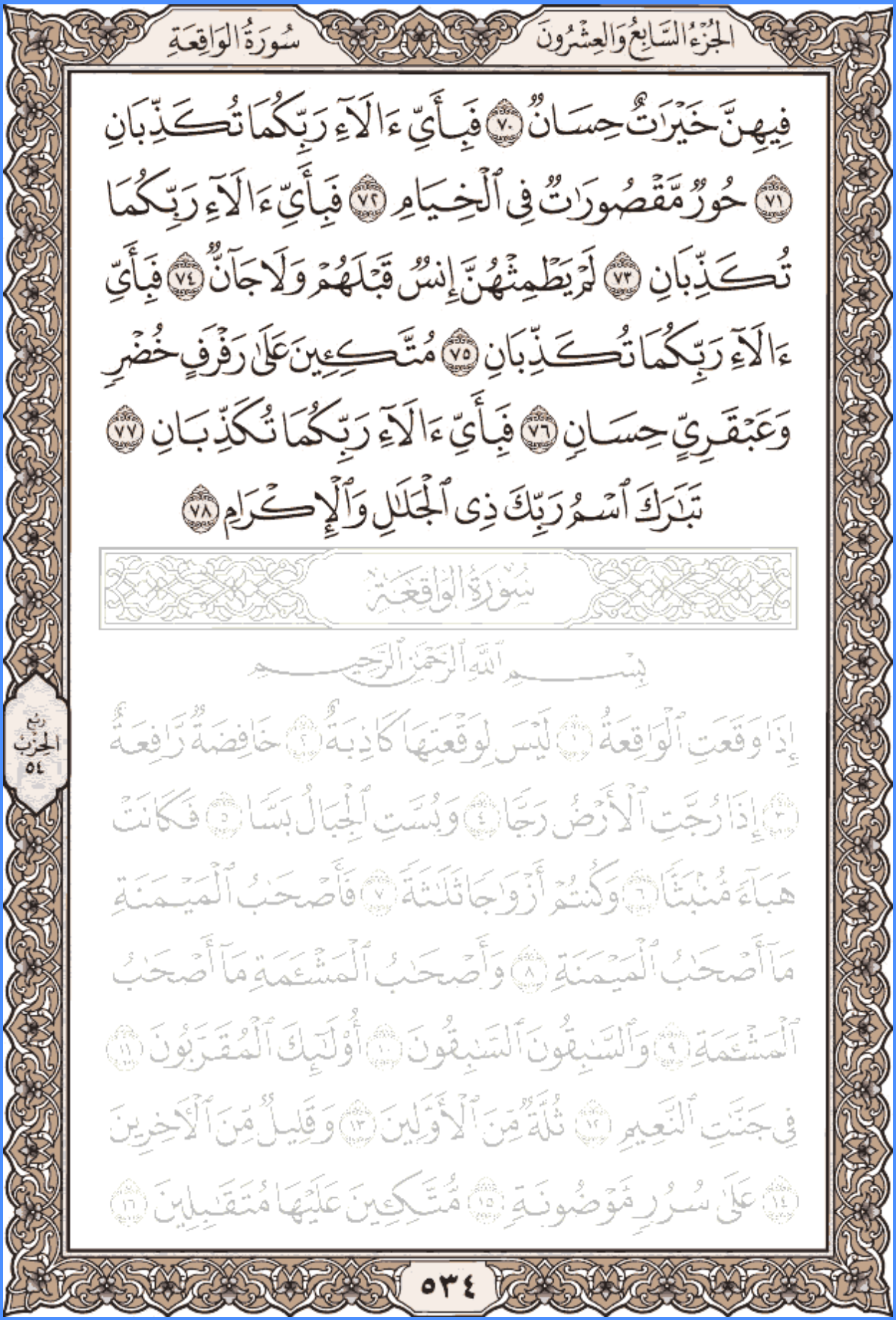
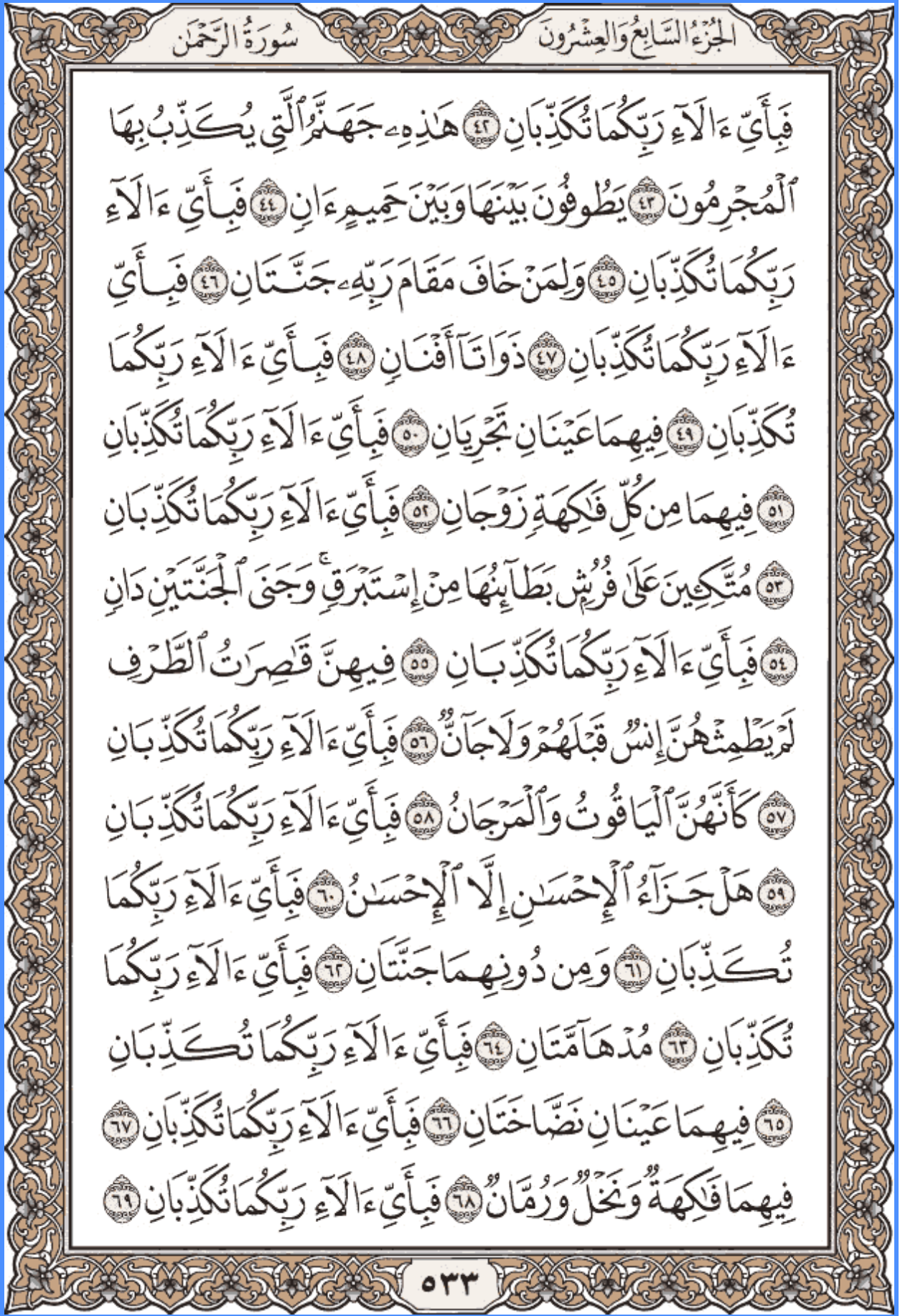
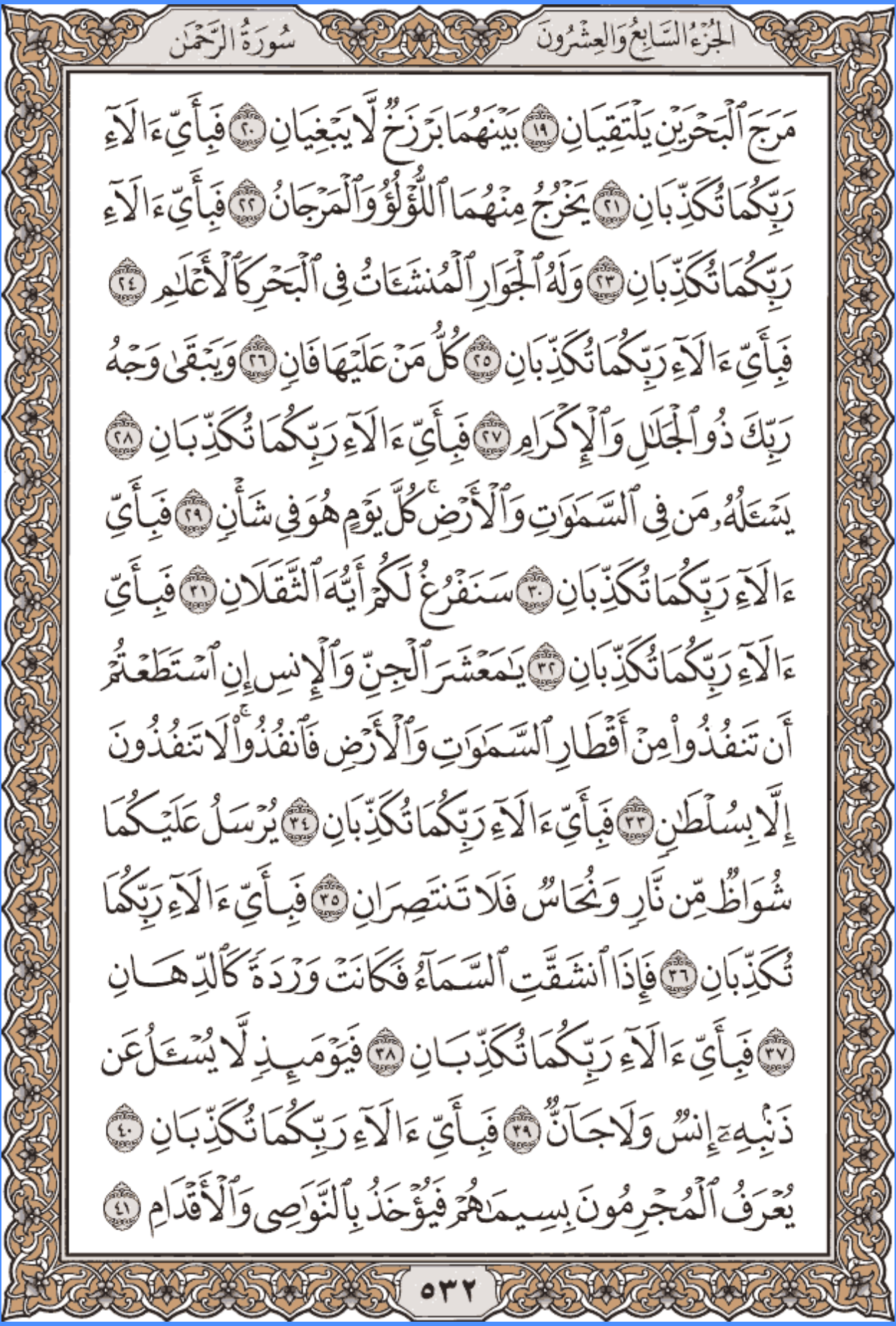
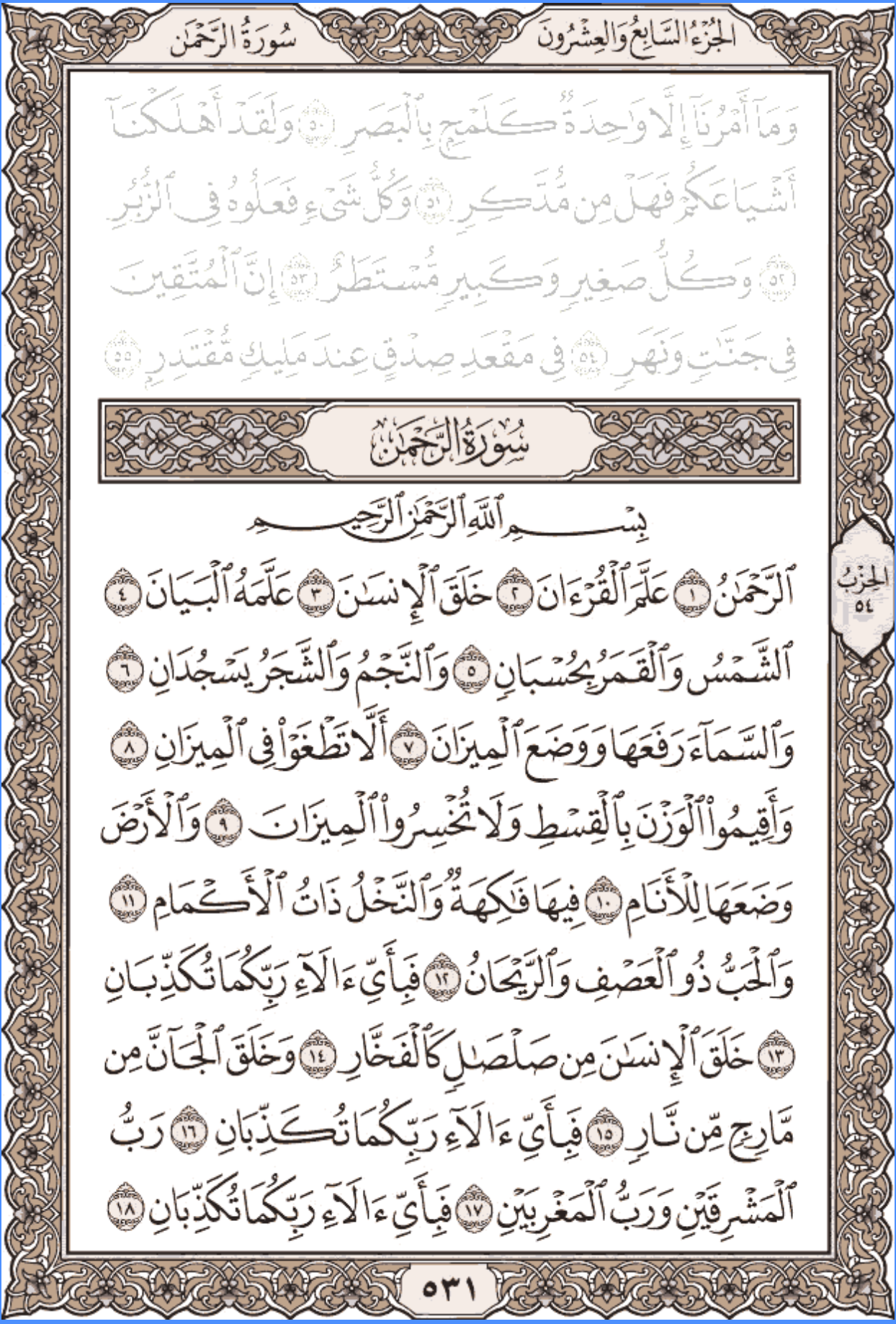
In the symphonic rhythm of Surat Ar-Rahman, one question echoes 31 times:
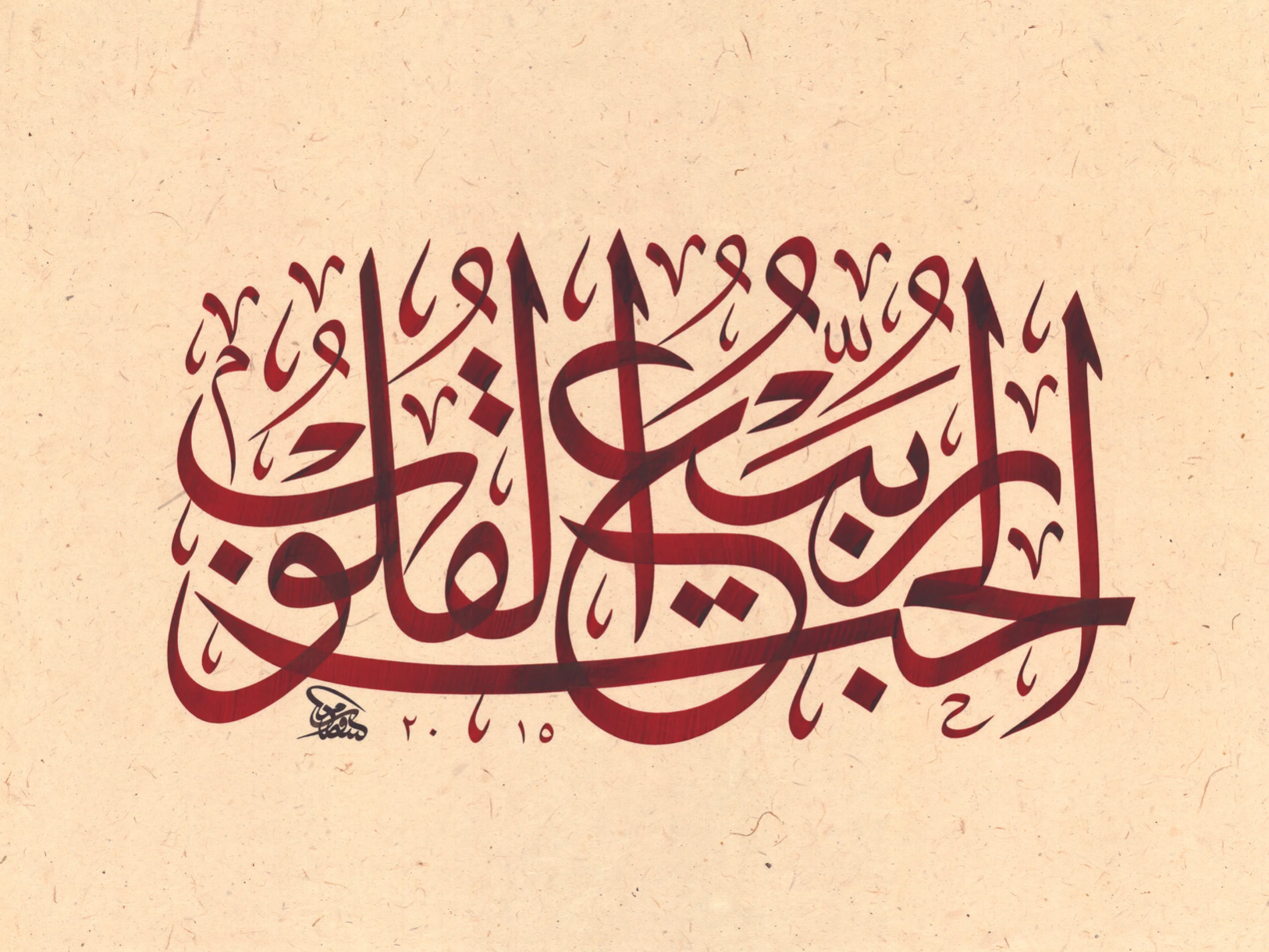
"So which of the favors of your Lord will you deny?"
"So which of the favors of your Lord will you deny?"
This refrain—punctuated by poetic cadence and divine challenge—threads through the 78 verses of the Surah, serving not merely as repetition, but as rhetorical revelation. Its form, expressed in the dual grammatical case in Arabic, addresses both humans and jinn, invoking a cosmic court where both creation and consciousness are held accountable.
Divine Wisdom in the Architecture of the Universe
(Verses 1-4) Surat Ar-Rahman opens not with wrath or judgment, but with Rahmah—compassion. It introduces Allah as The Most Gracious, the one who taught the Qur’an, created humankind, and endowed us with bayān—intelligent speech, articulation, the capacity to reason. These are not only favors; they are tools for understanding the divine message embedded in nature, revelation, and self.
Verses (5-9) describing the precise orbit of the sun and moon, the prostration of stars and trees, and the balance (mīzān) set in the heavens reveal an ordered universe governed by divine justice. The Balance, both literal and symbolic, is central to human ethics: we are urged to act with fairness, to uphold equilibrium in trade, speech, and conduct. Disruption of this balance—through injustice, greed, or moral negligence—invites chaos.
Duality as a Path to Unity
Throughout the Surah, duality emerges as a spiritual motif: the creation of man from clay and jinn from smokeless fire (verses 15,16), the two Easts and two Wests (verse 17), the mingling of saltwater and freshwater (verses 19,20), two springs in each garden (verse 50), two kinds of fruit (verse 52). Everything is created in pairs—an echo of the Quranic verse: “And of everything We created pairs, that you may reflect.” (وَمِن كُلِّ شَيْءٍ خَلَقْنَا زَوْجَيْنِ لَعَلَّكُمْ تَذَكَّرُونَ) Yet through these opposites, unity is realized—not in sameness, but in purpose, direction, and origin.
In Surat Ar-Rahman, duality doesn't divide; it reflects the harmony of a universe in tension, held together by a divine center.
Divine Justice: Mercy and Consequence
While the Surah sings of divine generosity—lush gardens, flowing springs, fruits, silk, and celestial order—it does not neglect the specter of accountability. The vivid descriptions of Judgment Day are raw and uncompromising. Sinners are marked, seized, scorched by fire, and offered boiling water. Denial, it warns, comes at a cost.(verses 33-45)
But here, too, the refrain resounds: "Which of your Lord’s favors will you deny?" Even justice is a mercy. Even consequence is a favor—because it upholds the balance that sustains existence.
Revelation and Free Will
The Surah affirms that humanity has not been left adrift. Divine revelation, like light, has been sent to illuminate the path. The Quran is a favor—a gift of guidance preserved through prophets and scriptures. And yet, humanity—despite the signs in sky and scripture, in blood and breath—often chooses disbelief or heedlessness.
Why?
Because of free will—the gift that distinguishes human beings from other creatures. We are not bound to instinct; we are empowered by choice. This, too, is a divine favor. And with it comes responsibility: to reflect, to question, to pursue justice, to acknowledge blessings even when veiled in trials.
Rebellion, Regeneration, and the Sacred Cycle
In the divine rhythm of Surat Ar-Rahman, rebellion is not vilified—it is understood. To deny Allah’s favors is not always an overt act of disbelief. Sometimes, it’s quieter: indifference, self-centeredness, or a life lived without reflection. And yet, within the cyclical design of creation—day and night, rise and fall, life and death—there is always room for return. Tawba, or repentance, is rebellion reoriented: no longer a rejection of God, but a rejection of ignorance and heedlessness.
Mistakes are not final. They are invitations—portals to learning. Allah, in His mercy, granted us free will not to watch us fail, but to allow us to choose again—wiser, deeper, with elevated consciousness. Through this process, rebellion becomes refinement, and repentance becomes elevation—not only of the self, but of the collective good. Like fire in a forest clearing deadwood, rebellion can be a sacred agent of renewal. When it turns inward—when rebellion becomes self-inquiry—it transforms into a path of repentance.
Thus, Surat Ar-Rahman reminds us: transformation is not born in perfection, but in awakening. And awakening often begins with fire.
The refrain of Surat Ar-Rahman is not a threat—it’s an invitation. A call to awaken from distraction, to see through the veils of ego, and to realign with what is real, eternal, and good.
Conclusion: A Mirror Held to the Soul
Surat Ar-Rahman is both hymn and mirror. It reflects the majesty of divine creation and the frailty of human perception. It offers beauty and warning, grace and accountability. It demands that we reflect not just on what Allah has given us—but on how we respond.
Do we uphold the balance? Do we act justly? Do we recognize the favors that surround us every day, in breath, in thought, in the fire of the sun and the sweetness of water?
"So which of the favors of your Lord will you deny?"
The answer lies not in words—but in how we live.
Surat Ar-Rahman (The Most Gracious)
Translated by: M.A.S. Abdel Haleem
This version is used in academic and religious contexts and published by Oxford University Press.
1. The Lord of Mercy
2. taught the Qur’an,
3. created man,
4. and taught him speech.
5. The sun and the moon follow their calculated courses;
6. the stars and the trees bow down in worship.
7. He raised the sky and set the balance
8. so that you would not exceed the balance.
9. Weigh with justice and do not fall short in the balance.
10. He laid out the earth for His creatures,
11. with its fruits, its palm trees with sheathed clusters,
12. its husked grain, its fragrant plants.
13. Which, then, of your Lord’s favors will you both deny?
14. He created man from dry clay, like earthenware,
15. and He created jinn from smokeless fire.
16. Which, then, of your Lord’s favors will you both deny?
17. He is Lord of the two risings and Lord of the two settings.
18. Which, then, of your Lord’s favors will you both deny?
19. He released the two bodies of water to meet,
20. yet between them is a barrier they do not cross.
21. Which, then, of your Lord’s favors will you both deny?
22. Pearls come forth from them, both large and small.
23. Which, then, of your Lord’s favors will you both deny?
24. His are the ships that sail, raised up like mountains on the sea.
25. Which, then, of your Lord’s favors will you both deny?
26. Everyone on earth perishes;
27. only your Lord Himself, full of Majesty and Honor, remains.
28. Which, then, of your Lord’s favors will you both deny?
29. All those in the heavens and on earth ask Him; every day He is bringing about a matter.
30. Which, then, of your Lord’s favors will you both deny?
31. We shall attend to you two classes (of beings), O jinn and men!
32. Which, then, of your Lord’s favors will you both deny?
33. O assembly of jinn and men, if you can pass beyond the realms of the heavens and the earth, then do so; you will not pass except with authority.
34. Which, then, of your Lord’s favors will you both deny?
35. A blast of fire and smoke will be sent upon you and you will not be able to defend yourselves.
36. Which, then, of your Lord’s favors will you both deny?
37. When the sky is torn apart and turns crimson like red hide—
38. Which, then, of your Lord’s favors will you both deny?
39. on that Day neither man nor jinn will be asked about their sins.
40. Which, then, of your Lord’s favors will you both deny?
41. The guilty will be known by their mark and will be seized by their forelocks and their feet.
42. Which, then, of your Lord’s favors will you both deny?
43. This is the Hell the guilty deny:
44. they will go round between it and scalding water.
45. Which, then, of your Lord’s favors will you both deny?
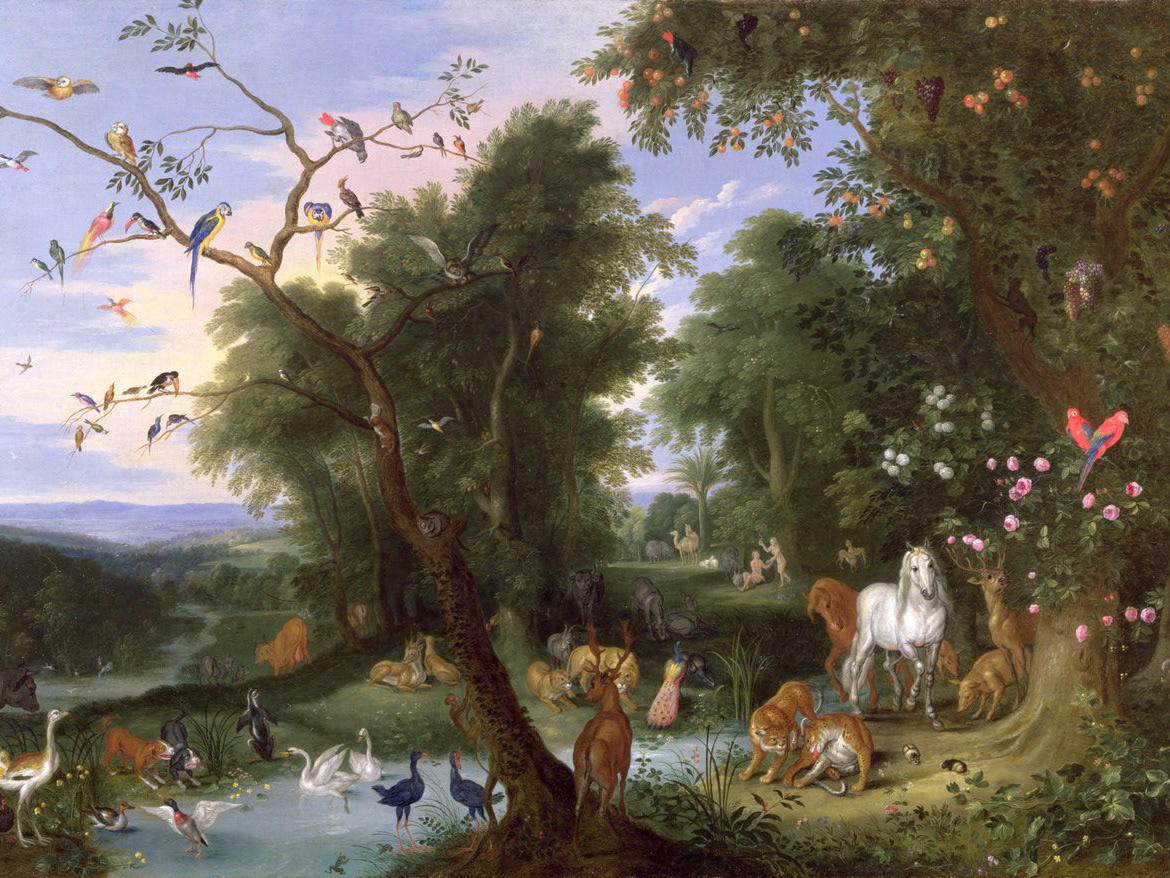
46. But for those who fear standing before their Lord there are two gardens—
47. Which, then, of your Lord’s favors will you both deny?
48. with shady branches.
49. Which, then, of your Lord’s favors will you both deny?
50. with two flowing springs.
51. Which, then, of your Lord’s favors will you both deny?
52. each of them with every kind of fruit in pairs.
53. Which, then, of your Lord’s favors will you both deny?
54. They will sit on couches lined with brocade, the fruits of the gardens hanging close.
55. Which, then, of your Lord’s favors will you both deny?
56. There will be maidens of modest gaze, untouched before by man or jinn.
57. Which, then, of your Lord’s favors will you both deny?
58. Like rubies and coral.
59. Which, then, of your Lord’s favors will you both deny?
60. Shall the reward for good be anything but good?
61. Which, then, of your Lord’s favors will you both deny?
62. And besides these two, there shall be two more gardens
63. Which, then, of your Lord’s favors will you both deny?
64. dark green in color.
65. Which, then, of your Lord’s favors will you both deny?
66. with two gushing springs.
67. Which, then, of your Lord’s favors will you both deny?
68. In them are fruit, palm trees, and pomegranates.
69. Which, then, of your Lord’s favors will you both deny?
70. In them are good and beautiful ones—
71. Which, then, of your Lord’s favors will you both deny?
72. maidens sheltered in pavilions.
73. Which, then, of your Lord’s favors will you both deny?
74. Untouched before by man or jinn—
75. Which, then, of your Lord’s favors will you both deny?
76. Reclining on green cushions and rich carpets.
77. Which, then, of your Lord’s favors will you both deny?
78. Blessed is the name of your Lord, full of Majesty and Honor.